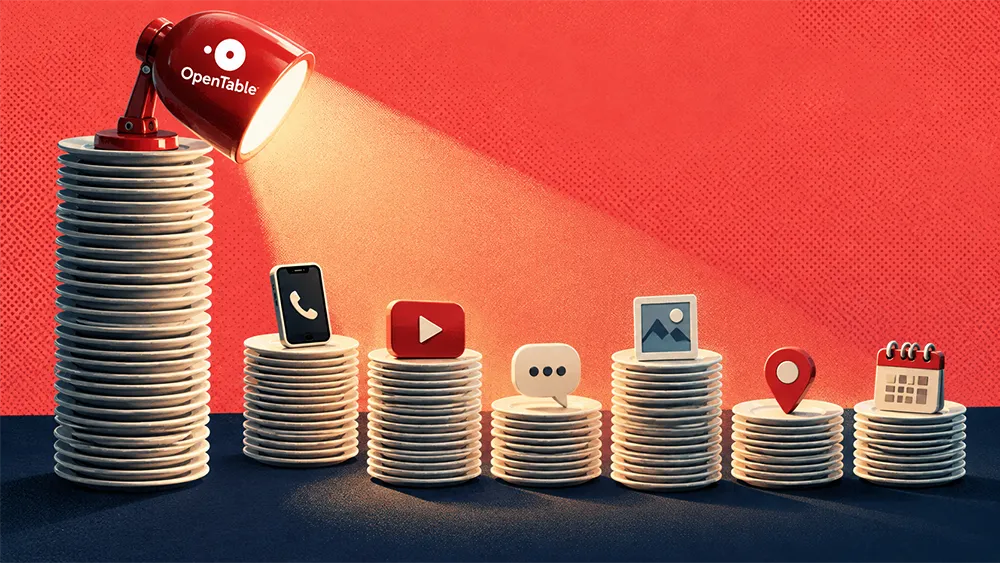

Most B2B companies still get attention the way they did twenty years ago. They buy ads, pitch reporters, sponsor other people's conferences and hope the feed cooperates. All of that can work, but the attention ends when the spending does.
Owned media is the other path. A company builds its own channel, usually a publication, and earns a regular audience among the people it wants to reach. Over time that publication becomes where those people go to figure out what's going on in their industry, and the company's best thinking lives there instead of being scattered across press hits, podcast appearances and event recaps.
The framework below is drawn from how Outlever, the company that powers The State of Brand, sets up owned media for its customers, along with what we've seen from the brands and executives we cover. Expect a program like this to take a year or more to show its full value.
What an owned media strategy covers
An owned media strategy is a plan for a channel your company controls and the audience you want that channel to earn. The publication sits at the center. Around it are the people who appear in it, the point of view that runs through it, and the places that point of view travels: inboxes, LinkedIn, conference stages, events and communities.
People often confuse this with a company blog. A blog mostly covers the company itself, with product news, announcements and posts written to rank for keywords. An owned media property covers the industry. It reports on what's happening to your customers, interviews the people shaping the field, and says what the editors think it all means. Your company's expertise shows up throughout as analysis, and the product mostly stays offstage.
If the concept is new to you, our guides What Is Owned Media: The Official Guide and How Is Owned Media Different Than PR? cover the basics.
Step 1: Decide who the publication is for
Start with a specific reader. "Marketers" is too broad to write for. "CMOs at mid-market software companies who just lost a third of their paid budget" gives an editor something to work with. For most B2B companies the reader is the ideal customer profile, meaning the executives who buy your product, influence the purchase or decide whether to renew.
Those readers should also be the subjects of your coverage. A good owned media property reports on what's happening in their world, asks how their peers are handling it, and puts their names and faces in the stories.
Write down answers to these questions before you publish anything:
Which two or three job titles are you writing for?
What are those people dealing with this year? Think about budget cuts, new technology, reorganizations and anything that could cost them their jobs.
What do they already read, and where are the gaps? Most industries have trade press for news and analysts for trends. Far fewer have a place where peers talk openly about what's working for them.
How and when do they read? Some go through their inbox at 7 a.m., some scroll LinkedIn between meetings, and a lot of reading starts with a link a colleague drops in Slack.
What would they forward to a colleague or their boss? If readers pass a piece along, you've probably got the editorial right.
Those answers become your editorial brief.
Step 2: Develop a point of view
People subscribe to perspectives more than to topics. Lots of outlets will tell your reader that AI is changing their job. Very few will say which parts of the job, what to stop doing, and which piece of conventional wisdom is about to age badly. An owned publication has room to do that.
Having a point of view means holding positions you'll defend in public, knowing some of them may turn out wrong. Before launch, put these on paper:
A thesis of one or two sentences about how your industry is changing. At The State of Brand, ours is that brands are turning into media companies, and the ones that don't will keep paying for attention they could have built themselves.
Three to five editorial pillars, the themes you'll keep coming back to. Tie each one to a problem your reader has, and they'll keep you focused without crowding out news.
Your stance on the big debates in your field. Trade publications are built to stay neutral. Yours can afford to pick a side.
A list of topics you won't cover, including product content dressed up as editorial. Turning stories down is a large part of how a publication earns credibility.
When you test an angle, ask whether a smart reader could reasonably disagree with it. If nobody could, you've probably written a summary.
Revisit your angles every month or so. When something big hits your industry, like a platform change, a high-profile layoff or a new regulation, you should know within a day what you think and whom you'd call for comment.
Step 3: Launch a publication that represents the industry
Many companies put their publication on the corporate website under the corporate brand. Then they find that executives at other companies won't take part and readers treat everything on it as marketing.
An adjacent publication works better. It has its own name, its own site and its own editorial identity, and the company backing it is disclosed openly. The State of Brand is set up this way: it covers brand and marketing broadly, and readers can see that Outlever powers it.
This setup has practical advantages. A publication named for a category can credibly bring that category together, whereas a company blog speaks for one company. Executives elsewhere are far more likely to agree to an interview with an industry publication, and their comms and legal teams are more likely to sign off. Over time a separate publication also builds its own search authority, subscriber list and reputation, until people start looking for it by name.
When you set it up:
Name it after the category. Names built on "the state of," "the future of" or the industry itself tell readers the scope is broad.
Give it a separate domain and design, with sections, bylines, author pages and a masthead, so it reads like a publication.
Say who's behind it, on an about page and in a standard line on articles. Readers who discover a hidden sponsor rarely come back.
Plan for search early. Definitional guides, glossaries and frameworks can rank for years, and timely coverage keeps the site current.
Link to the backing company where it actually helps the reader, as this article does, and leave it out everywhere else.
Step 4: Feature real people with real opinions
The quality of an owned media property depends mostly on its people. Readers can tell when an article was assembled from other articles, and they notice when a named executive says something they haven't heard before. Now that anyone can produce a decent explainer in seconds, first-hand perspective is much harder to come by and worth far more.
Two groups should appear regularly.
Executives from other companies. Customers, prospects, partners and well-regarded operators can describe how they're handling the problems your readers face. Readers hear from peers, the executives get visibility, and your company gets to know people it would like to work with.
Your own executives and experts. Your team supplies the analysis that ties the coverage together. Their job is to explain what's happening, spot patterns across many conversations and say what those patterns mean. When they do this well, readers work out for themselves that your company knows the field.
Some practical guidance:
Start pieces from interviews. A half-hour conversation usually turns up more original material than a week of desk research.
Ask for specifics: the example, the mistake, the decision they'd make differently. Quotes smoothed over until legal could approve them without reading are of no use to anyone.
Include people who disagree with each other, and with you. A publication where every guest shares the host's view reads like a brochure.
Make guests look good. Send them the finished piece in a format that's easy to post, and tag them. Many will share it, often with more of the right people than your own channels reach.
Stay in touch. Someone you interview this quarter might speak at your event next quarter, join your community, or eventually become a customer.
Step 5: Set up an editorial operation
A content calendar tells you what to publish and when. To publish well every week for years, you also need a dependable way of turning industry news and your people's knowledge into stories, one that keeps running when a writer goes on vacation.
The pieces of that operation:
A mix of formats. Most good publications run quick takes on news with an expert quote or two, longer features built on a single interview, analysis where your experts draw on many conversations, and evergreen guides meant to rank in search.
A steady flow of interviews. Each conversation can supply a feature, quotes for news pieces, a newsletter item, LinkedIn posts and short video clips.
A schedule you can keep. Readers trust a publication that shows up every Tuesday more than one that publishes ten pieces in March and nothing in April.
Editorial standards. Check facts, edit for clarity, and ask of every draft whether a busy executive would be glad they spent the time on it.
Good tooling. Scheduling, transcription, research, first drafts and repurposing go much faster with modern software, AI included. Spend your team's time on judgment, relationships and choosing the angle, since those can't be handed off.
Set up properly, the operation asks very little of your executives. They show up for interviews, share what they know and approve drafts.
Companies like Outlever have productized this in a way that makes it efficient. You don't need to spend millions a year trying to build it out on your own.
Step 6: Reach your audience on every channel, every week
Publishing an article doesn't mean anyone reads it. The publication works as a hub, and the channels around it give people reasons to come back. All of them should carry the same point of view and draw on the same reporting.
Newsletter. Email is the one channel a platform can't throttle, which puts the newsletter at the center of owned media. Good B2B newsletters are short and opinionated, and they arrive on schedule. They tell the reader what matters this week and what the editors make of it. Track opens, replies and forwards along with list size. Five thousand of the right executives will do more for you than fifty thousand random sign-ups.
LinkedIn. Most professional conversation in B2B happens on LinkedIn, and the platform favors individuals over company pages. Your executives should post regularly from their own accounts, using the publication's reporting and their own opinions. Tag featured guests and give them something easy to reshare. Keep the publication's page active, but expect most of the reach to come through people.
Executive speaking. Podcasts, panels and keynotes take the publication's point of view to audiences that haven't found it yet. When your executives speak from the same thesis the publication covers, the talks and the articles reinforce each other, and the publication keeps them supplied with fresh examples.
Events. Many owned media programs grow into events: roundtable dinners, small executive briefings, virtual sessions and eventually a flagship gathering. Readers who come to an event start participating, and what they say feeds the next round of coverage. A dinner for twelve well-chosen executives can supply a month of stories and relationships that last for years.
Community. The longest-lasting owned media properties tend to build a community where readers talk to one another as well as to you. It could be a private group, a peer council or a recurring cohort. Members come back for each other, and that kind of loyalty is hard for a competitor to pull away.
Because every channel reuses the same interviews, opinions and relationships, each new one costs less to add than it would to start from scratch.
Step 7: Connect it to sales, customer success and leadership
Owned media kept inside the marketing team does less than it could. It gets much more useful once sales, customer success and executives all draw on it.
Sales teams can offer prospects a chance to be featured, which makes for a much warmer opening than a cold email. Sending a relevant article before a first call also shows what your company knows.
Customer success teams can feature customers' leaders, invite them to events and send them coverage that helps with their work, all of which makes renewal conversations easier.
Executives get a platform for the positions they want the market to connect with the company.
Pay attention to timing. A relevant piece sent personally around a budget cycle, a board meeting, a renewal or a launch does far more than the same piece posted to a feed. When you look at results, ask who read it and what they did afterward. Impression counts tell you very little.
Step 8: Measure the right things
Pageview counts are easy to pull and easy to misread. Owned media pays off over a long period, and the useful questions are about who you're reaching and what happens afterward. Track four things:
Audience quality. How many people from your target accounts read, subscribe and follow?
Engagement. Newsletter opens and replies, time on page, return visits, forwards and shares.
Relationships. Executives interviewed, guests who came back, event attendees and community members. Most of these are people your company didn't know before.
Business results. Readers and featured guests who turn into pipeline, deals the content helped close, effect on renewals, and growth in organic and branded search.
Search rankings and audience size usually take several months to build, while the relationships start with your first interview.
Common mistakes
Turning the publication into a sales channel. Readers stop trusting it quickly.
Publishing everything under the company name, when readers respond to named people with opinions.
Publishing more instead of publishing better. One piece with a strong argument will outperform ten forgettable ones.
Running each channel as its own program with its own message.
Stopping after a few months. Most programs that fail are abandoned before the audience has had time to grow, so plan on at least a year at a steady pace.
Reporting only traffic, which pushes the team toward clickbait and away from the executives you care about.
Putting it together
The aim of all this is for your company to run the publication your market reads to understand what's going on. That means picking a specific reader, taking positions, building a publication that covers the whole industry, filling it with real people, running it on a schedule, getting it in front of readers wherever they spend time, and tying it to how your company sells.
Companies that keep at it end up with an audience that trusts them, relationships with the executives who matter most to their business, and a point of view people associate with their name. Those are hard for a competitor to copy.
Outlever builds and runs owned media programs like this for B2B companies, covering strategy, the publication itself, executive interviews, newsletters and distribution. If you're considering one, get in touch with the Outlever team.
Disclosure: The State of Brand is an owned media publication powered by Outlever. This article describes the approach Outlever uses with its customers and links to Outlever's website. It is provided for informational purposes only and does not constitute professional, legal or financial advice. Results from any owned media program vary by company, industry and execution.